The DASH diet stands for Dietary Approaches to Stop Hypertension. This diet is used to lower blood pressure in order to prevent diseases like diabetes or cardiovascular disease. The parameters of this diet include daily servings of: Grains 6-8 Vegetables 4-5 Fruits 4-5 Low-fat dairy 2-3 Meats, poultry, and fish 6 or less Fats and oils 2-3 Weekly servings of: Nuts, seeds, and legumes 4-5 Sugar 5 or less
The idea of this diet is to reduce the amount of sodium intake as well as alcohol, caffeine, and sugar. This diet also increases whole foods, fruits, vegetables, and fiber. Following this diet will help to achieve a healthy body weight and reduce blood pressure which will reduce your risk for developing diseases. A one-day meal plan for a person on this diet would look like the following example:
Breakfast:
Oatmeal (organic steel cut oats) to increase fiber Orange for vitamin C and potassium Hard-boiled eggs (2) for protein Glass of low-fat milk for calcium
Snack- apple for antioxidants and peanut butter for protein, zinc, and magnesium.
Lunch:
Kale Chicken Salad with kale, spinach, broccoli, carrots, chicken, sunflower seeds, tomatoes, and a small amount of low-fat ranch dressing. The broccoli and kale will give vitamin K, the carrots will provide vitamin A, and the tomatoes will give vitamin C. The sunflower seeds add fiber, zinc, folate, and vitamin B6. The chicken will give protein as well as vitamin b12 to help brain function and energy levels. The dressing is for taste and enjoyment.
Snack- Carrots and hummus for vitamin A, sodium, calcium, and magnesium
Dinner- Salmon for omega 3 fatty acids and magnesium Roasted bell peppers for vitamin C and potassium. Roasted asparagus for vitamins A,C,E,K, and B6 as well as minerals such as folate, iron, copper, and fiber. Brown rice for fiber
Dessert- Dark chocolate for antioxidants
I learned about three new diets that are similar to the DASH diet in that they aim for optimal health and disease prevention. The first diet is called the Nutritarian diet and is based on the principles of high nutrient-density eating. The equation used for this diet is
Health = Nutrients / Calories.
It’s mainly a plant based diet with the majority of low calorie, nutrient dense foods being eaten and the least amount of high calorie foods eaten. It involves lots of fruits, vegetables, whole grains, nuts and seeds, and very minimal meat. It’s main focus is nutrient density of foods. This diet has been shown to promote health and longevity of life because of all of the whole foods being eaten versus processed foods.
The next diet is the Pritikin diet which focuses on a wide variety of whole foods and very limited processed foods. It is very similar to the Nutritarian diet, but the main focus is different. The components of this diet include fruits, vegetables, whole grains, and calcium-rich foods. It involves small amounts of fish and lean meats and tries to avoid all processed, high sodium foods. It’s main focus is to promote a healthy weight and prevent the main killer diseases such as hypertension, diabetes, and heart disease.
The third diet I learned about is the Ornish diet which focuses on nutrition that makes your body feel good, promoting a joy of living, not having fear of dying and gaining overall health. It focuses on consuming predominantly fruits, vegetables, whole grains, legumes, egg whites, and nonfat dairy. The idea of this diet is to reverse diabetes, heart disease, and prostate cancer as well as promoting a healthy weight. I love this diet because it doesn’t classify foods as good or bad, just certain foods offer more health benefits than others. All three of these diets are very similar in the foods consumed and the idea to improve quality of life, overall health, and risk for diseases.
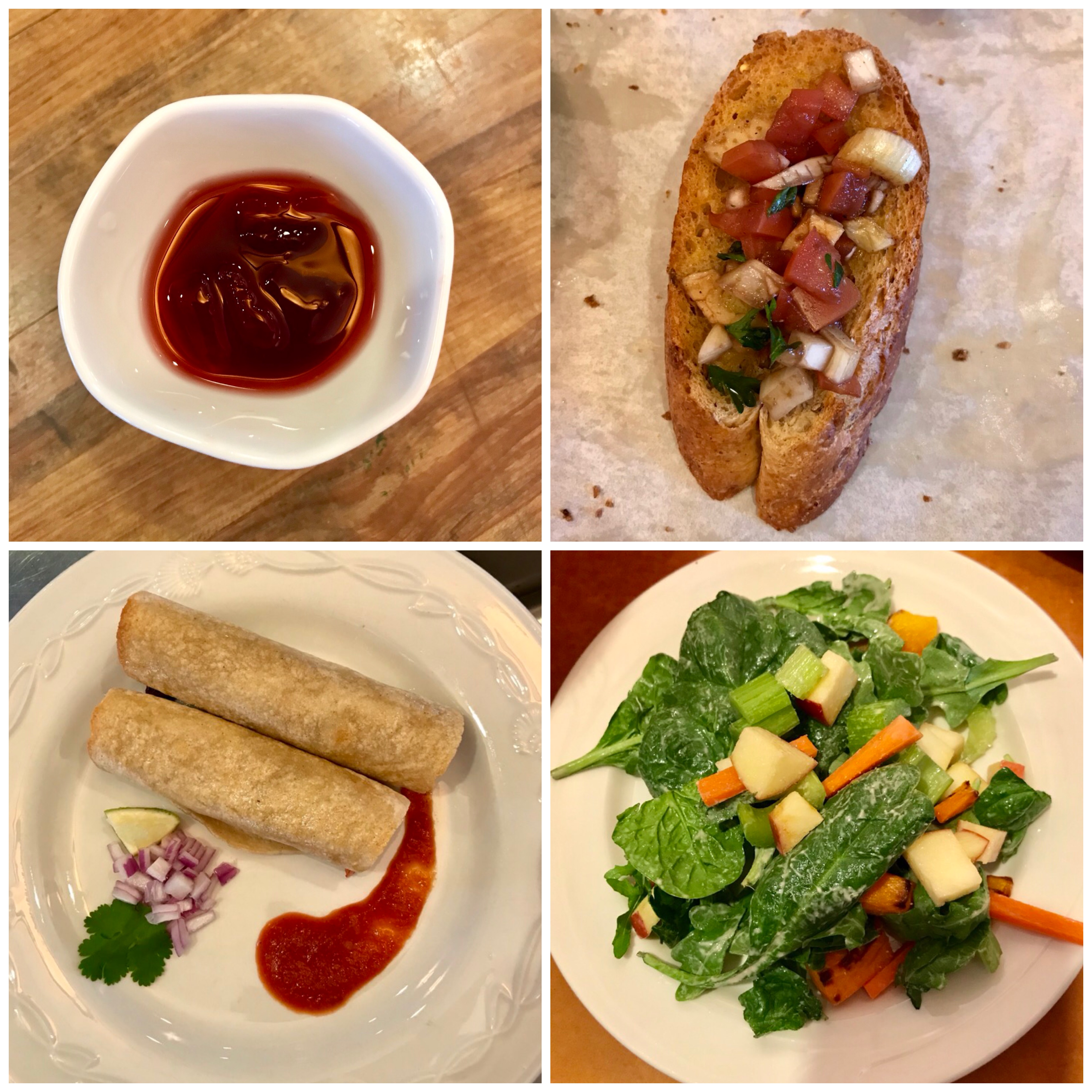
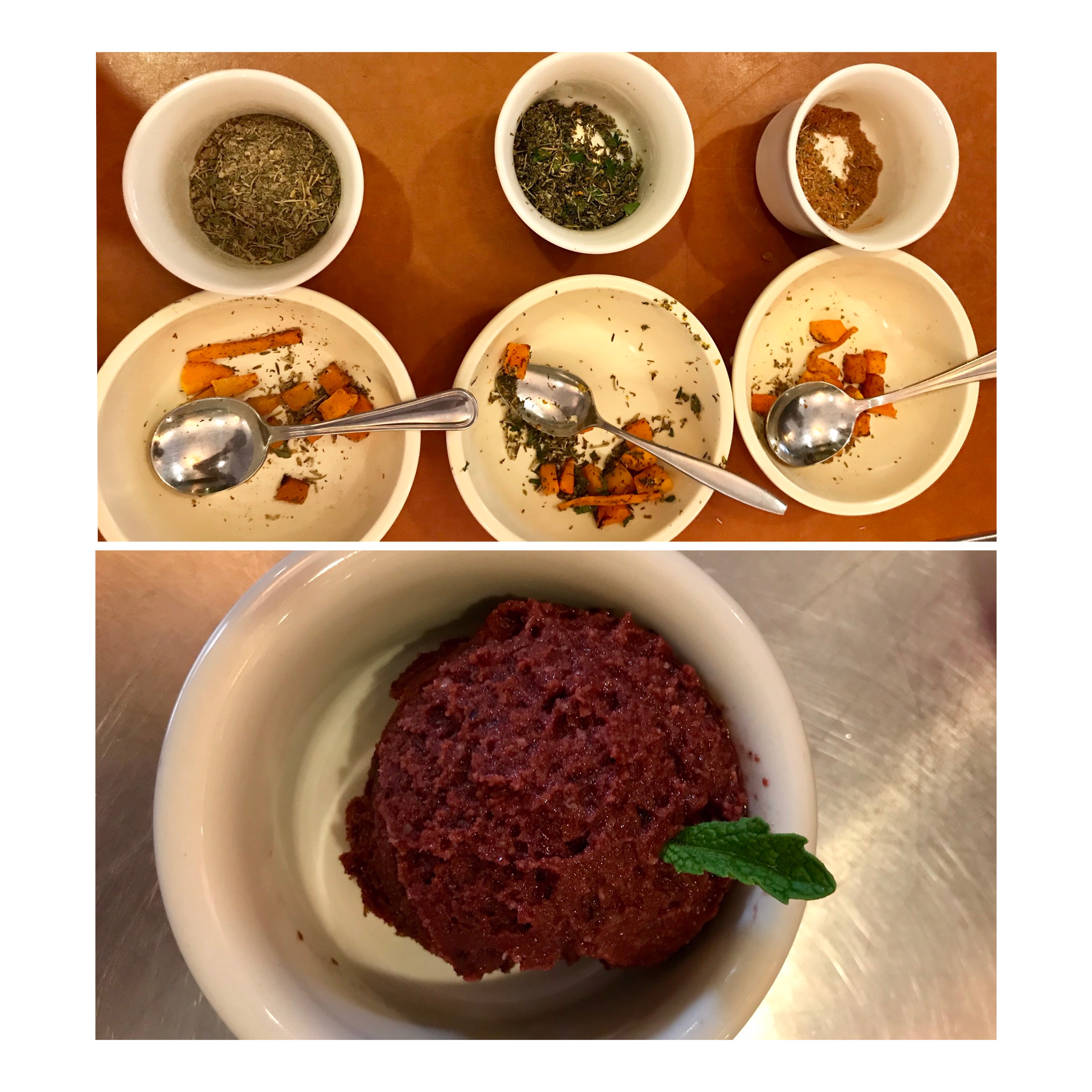
This week in class we made five delicious recipes that followed the DASH diet and three different seasonings that had no salt (a component of the DASH diet to limit salt intake). The recipes included a tea, bruschetta with arugula, spinach and apple salad, bean enchiladas, and a chocolate cherry ice cream. My favorite was the bean enchiladas because I loved the combination of vegetables and beans along with the spice from the sauce. All of the recipes were delicious though and I am definitely going to try and make the ice cream at home. I personally love dessert and am always looking for ways to incorporate healthier options. The recipes this week went very well together and followed the DASH diet really well. It incorporated so many nutrient dense foods and very limited salt. I also loved the idea of making different seasonings to use for poultry, beef, or seafood that doesn’t include salt. I think this diet is not only helpful for people with hypertension, but every person who wants to decrease their risk for disease. It is easy enough to follow and gives great guidelines to eating in a way that promotes health.

 Food for Thought