Many people experience gut distress when they eat certain foods. We eat food all throughout the day so it can be hard to know which food is causing the discomfort. FODMAPs are a type of carbohydrate found in all sorts of different foods that are not easily absorbed in the gut. It stands for Fermentable, Oligosaccharides, Disaccharides, And Monosaccharides. Basically, if you through a list of high FODMAPs foods and you tend to eat a lot of them, try cutting out the ones you eat the most. If you are still finding yourself in gut distress, cutting out all of the categories of FODMAPs is the next step. Don’t eat any high FODMAPs foods for 6 to 8 weeks and then slowly add each category back to your diet. If one category starts to cause pain again, you know which foods to avoid forever. To decide which foods to start bringing back first, you can either start soft and bring back low FODMAPs foods first and work your way up to high FODMAPs foods or you can go all in and bring back high FODMAPs foods first. You can also just begin by adding back your favorite FODMAPs foods and see if they are causing you pain. Meal planning for FODMAPs can be very restrictive, which is why it should only be done for a short period of time. It can be very effective in determining which foods are causing distress on your digestive tract. There are actually quite a few foods that should be limited for FODMAPs that surprised me. These include nectarines, watermelon, onion, green bell peppers, and cashews. For celiac disease, I did not realize how many foods contain gluten! Foods such as beer, barley, candies, and even cosmetic products can contain gluten. Having gut issues is never any fun and is not healthy either! Learning what foods irritate your system and avoiding them can do wonders for your overall gut health and immune system!
In class today, we focused on serving meals that followed the FODMAPs diet and they turned out amazing! We made a Crunchy Asian Salad, a Pumpkin Noodle Soup, Seeded Crackers, Summer Rolls, and Vegan Thai Iced Tea. We had to make a few substitutions to follow the FODMAPs diet. For example, for the Asian salad we used tamari instead of soy sauce and we also had to avoid using onions and garlic, very common ingredients in the kitchen. I didn’t really learn any new cooking techniques, but I used a cheese grater to shred carrots so that was new for me! I have never actually used a cheese grater because they honestly scare me so this was a new experience! The recipes turned out very colorful and tasted even better! It is so fun to see how to make good food based on a boring diet.
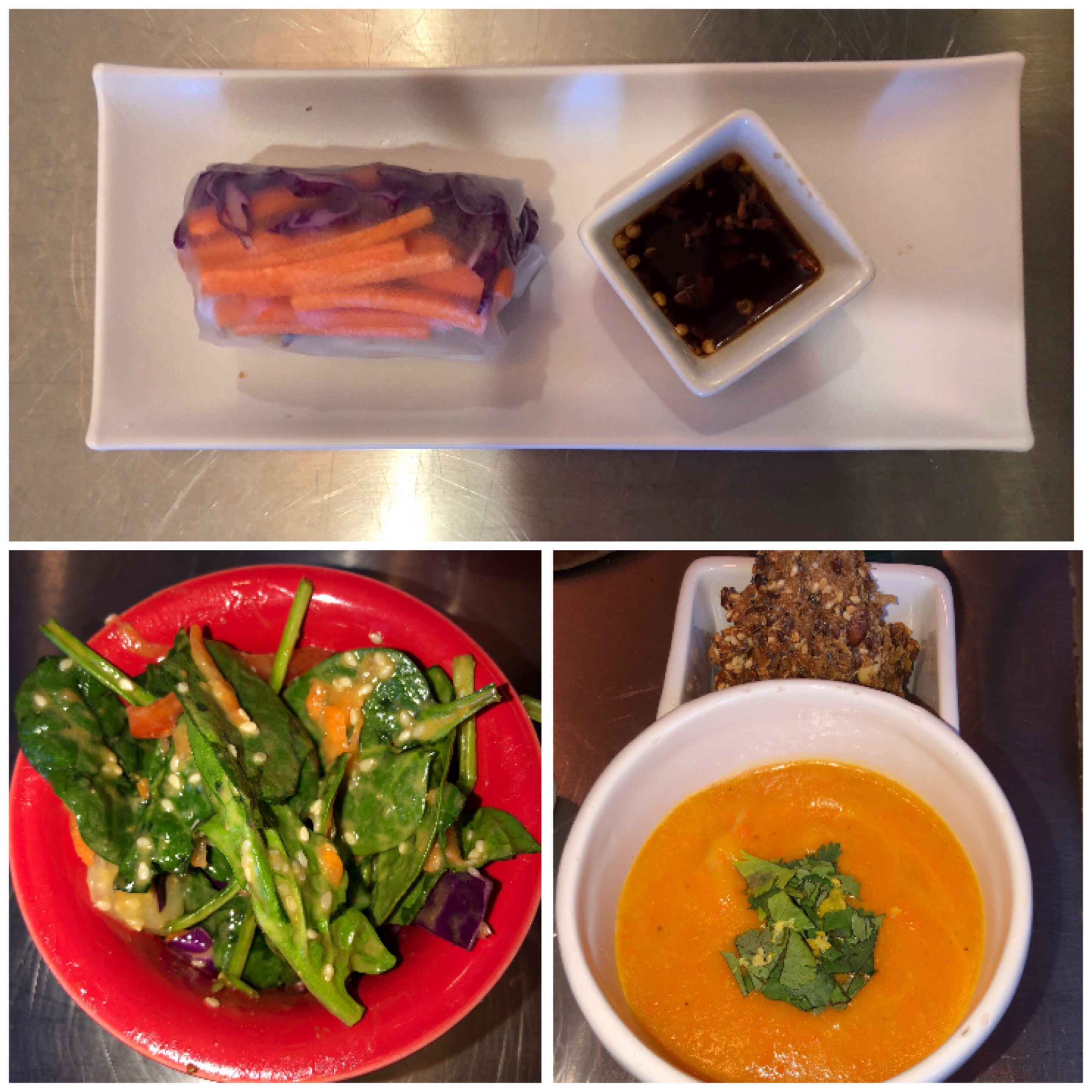
Overall, I am really enjoying this class and learning about so many different diets and foods to make. To prepare for class, I read through all of the attachments in our folder, I take the quiz, and I go through the recipes. To set up my work area, I always get a cutting board with a damp towel underneath, a knife, and bowls for scraps and mixing. Then once I read through the recipe, I gather all of the ingredients before starting so that I don’t have to keep going back and forth. For time management, like I said I gather all ingredients so that they are all at the table and I gather whatever other equipment I need. I start whatever is going to take the longest, first. I think I am getting better at plating my recipes. I use odd numbers, I leave white space, and I try and make it asymmetrical. To keep my work space clean, I try to clean as I go. When I know I am done with certain dishes I clear them right away and I clear trash that I don’t need at the table. When I have down time I wipe the table to make sure there is no mess. I think I am doing pretty well and really enjoying cooking each week. I will keep doing what I am doing. 🙂

 Food for Thought