This week we talked about the difference between food sensitivities, intolerances, and allergens. We learned how to substitute the popular allergens with other foods while cooking. The top 8 food allergens are milk, eggs, fish, crustacean shellfish, tree nuts, peanuts, wheat, and soybeans. Sometimes people might not be allergic to a food but eating certain foods can cause digestive distress. If they do not know which food is causing their discomfort, it would be good to use an elimination diet. This means that they would cut a food out of their diet that they think might be causing the distress and seeing if their symptoms improve. It is best to not eat the food for about 4-6 weeks and then reintroduce the food. Wait about 48-72 hours to see if symptoms appear. If the symptoms come back after eating that food, you have a sensitivity to it. I know I keep using different words like allergy and sensitivity, so you might be wondering if there is even a difference. Well, I can inform you that there is a huge difference! A food intolerance is when a person has trouble digesting a food, or the digestive system becomes irritated by a certain food. It does not involve the immune system. A food sensitivity is very similar to an intolerance, but is more of just an adverse reaction to food and is a lot harder for doctors to diagnose. They can sometimes involve the immune system, but the reactions are often delayed making it harder to correlate the food with the symptoms. A food allergy is an immune response to consuming a certain food. Symptoms are severe and include hives, swelling of the tongue, and and anaphylactic shock.
Food sensitivities are the number one illness affecting Americans, with 80-95 percent of the population having sensitivities that go undiagnosed. Some symptoms of sensitivities include bloating, migraines, irritable bowel, stomach ache, diarrhea, heartburn, nausea, gas, and vomiting. There really isn’t any clinical cure for a food sensitivities, but being able to identify the cause of symptoms and then removing it from your diet completely is the best way to stop intestinal discomfort.
There is a helpful acronym to aid in gut restoration called the 5 R’s. The first thing to do is to Remove. Get rid of the stressors causing gut discomfort. This might include doing the elimination diet for a short time to figure out what food is wrecking havoc on your system. Next is Replace. Add things back into your diet like digestive enzymes and hydrochloric acid to build the gut back up. Third is to Reinoculate. This means to replenish all of the good bacteria back into your gut by adding pre and probiotics into your diet. You can get these from fermented foods or supplements. Fourth is to Repair. Help your digestive tract repair itself by adding zinc, antioxidants, fish oil, and glutamine. Last is to Rebalance. Making sure to get enough sleep and exercise with help to balance your GI system as well as controlling stress.
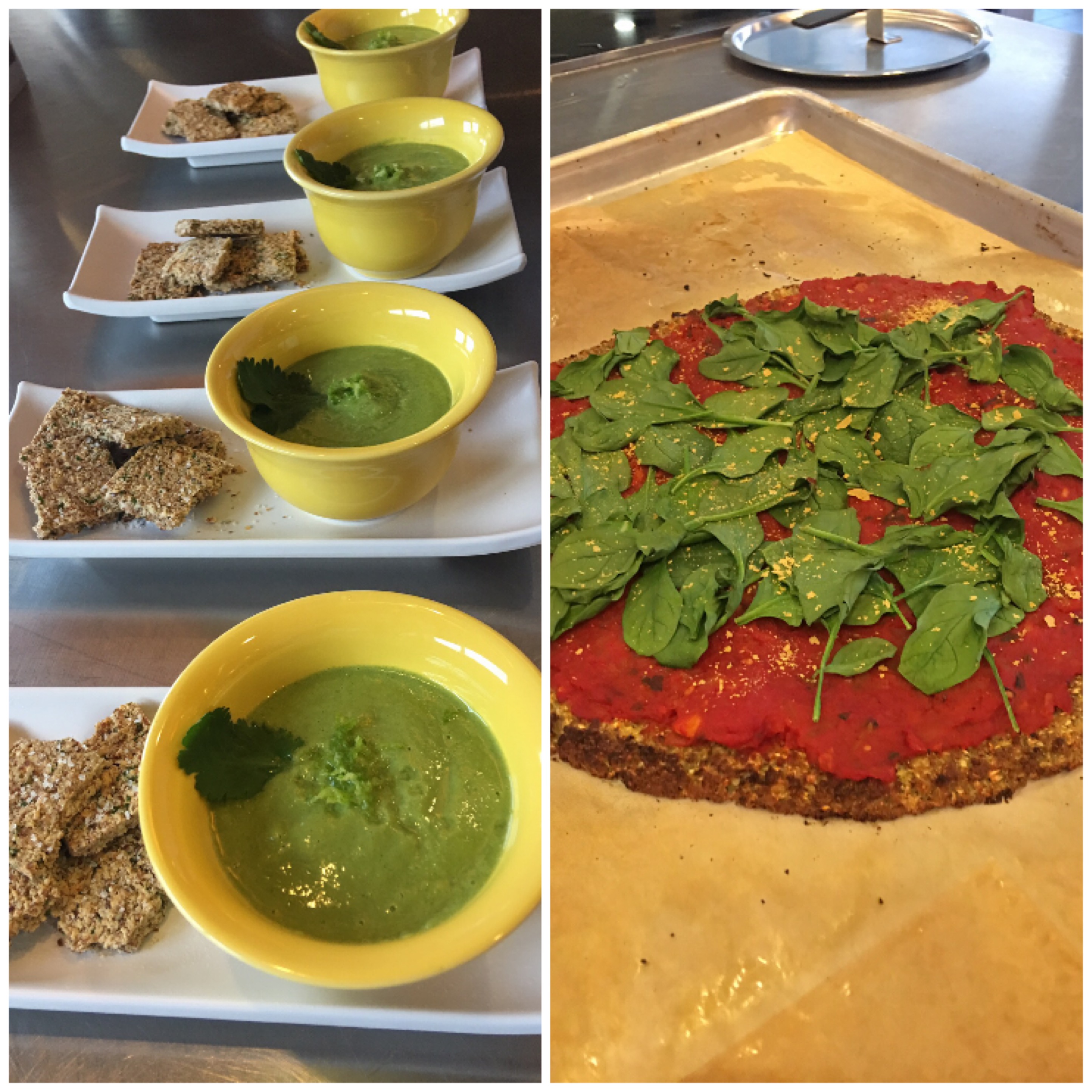
This week in class we made 4 recipes. The first was a greens soup and included cucumbers, avocado, watercress, wheatgrass, celery, and lime juice. We used a full avocado to substitute cream and it actually achieved a very creamy texture! The soup itself tasted a little earthy but I actually really enjoyed it. We made a nut cheese as well. We only did the first step, which was blend up all of the ingredients together, because we had to let it ferment for 24 hours. We substituted nuts for cheese to avoid any dairy products. I tasted it before we fermented it and it actually tasted really good! I liked the idea of not using dairy and think it actually tastes better. Next we made almond pulp crackers. These were super amazing for two reasons. First, it created zero waste because the almonds were first used to make almond milk. The leftover pulp was then used to make the crackers. Second, this recipe is perfect for people who are allergic to gluten. Any typical crackers would contain gluten, but these do not have any gluten and they’re super easy to make! I can’t think of a more perfect recipe; easy to make, no waste, and a yummy snack for everyone! The main dish that we made was the cauliflower crust pizza. Three different substitutions were used here. We first substituted using chia seeds in place of an egg. The gel that forms around the seeds after being soaked creates an egg-like texture and allows the crust to stick together. We also used cauliflower in place of actual flour. We also traded cheese for nutritional yeast. The pizza is now free of any dairy and wheat! It also tasted delicious and I think the texture of the crust was even better than regular pizza crust. This week was had some really amazing recipes and it was really cool to learn to cook using substitutions for allergies!

 Food for Thought