This week we focused on the importance of gut health and how we can prepare and cook foods to benefit our microbiome! Our gut is our main protector on being able to fight infections and prevent disease. The main concepts we learned about was fermentation, soaking, and sprouting. There are so many benefits to each of these processes, I had no idea that how you prepare food can be so beneficial to our health!
Fermentation is basically turning a food into it’s enzyme and probiotic-rich version of itself. Think of it like when you take a bath and put on a face mask, you’re a better version of yourself. That’s what it’s like to ferment food! Eating a little bit of fermented food each day can do wonders for your digestive system and gut microbiome. Some nutritional benefits include removing the anti-nutrients found in certain foods like nuts and seeds. These anti-nutrients block the digestion and absorption of the good nutrients found in these foods. Once these anti-nutrients are removed, the body can actually absorb the fun nutrients. Looking at the benefits of digestion, fermentation allows billions of life-giving microorganisms to proliferate and populate in our gut to get rid of unwanted bacteria and to increase nutrient absorption. Interestingly, it has been found that a healthy gut increases mood and decreases symptoms of depression, anxiety, ADHD, and even autism. Adding fermented foods to the diet can detoxify the colon, increase immunity, and reduce cravings for sugary foods. Who knew that fermented foods had SO many health benefits?!
Soaking and sprouting is good to do for foods that contain anti-nutrients like nuts and seeds. They have anti-nutrients to inhibit enzymes and to protect themselves from being eaten. These prevent our digestive system from breaking down nutrients and absorbing them. Have no fear though! Soaking and sprouting these foods in water neutralizes the anti-nutrients and allows us to digest and absorb as if they were never there! Soaking can also remove tannins and any residue from being shipped, resulting in a nicer flavor overall. It is important to note that you must be careful to not over-soak the nuts, seeds, or whatever you are soaking. This can lead to an unpleasant flavor or texture and can decrease nutritional value.
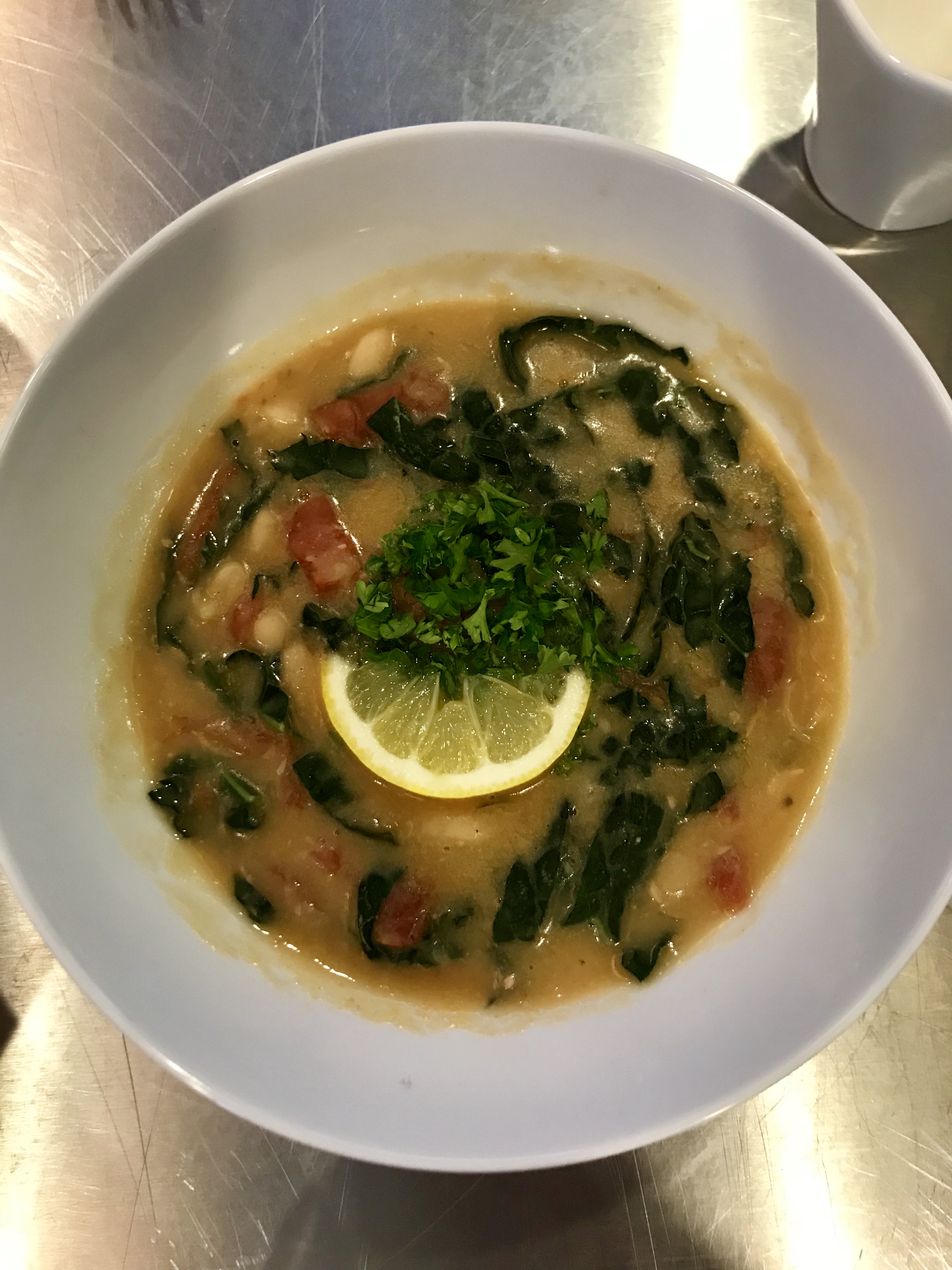
This week’s recipes were very unique and so delicious! A high for this week was probably learning more delicious meals to make at home and taking some time to de-stress a little bit. A low would be that there are a lot of stressful things going on. It was super nice to be able to cook, learn, and eat! My team member and I made the Tuscan White Bean Ragout which was probably my favorite dish of the night. It had a creamy, stew-like texture and so many nutritional benefits. We got Vitamin C from the kale, tomatoes, and parsley as well as fiber from the white beans. I had never used an immersion blender before which was used to blend some of the beans for the cream texture. The other recipes that were made included Sauteed Spinach with Garlic and a Hazelnut Chai, Focaccia Bread, and Sauerkraut Pancakes with Sauteed Apples. The Hazelnut Chai actually didn’t have chai in it, but juiced carrots instead! The sauerkraut pancakes were a great way to include fermented food into a typical dish! Each recipe was so unique and so delicious, I can’t wait to try them at home!


 Food for Thought