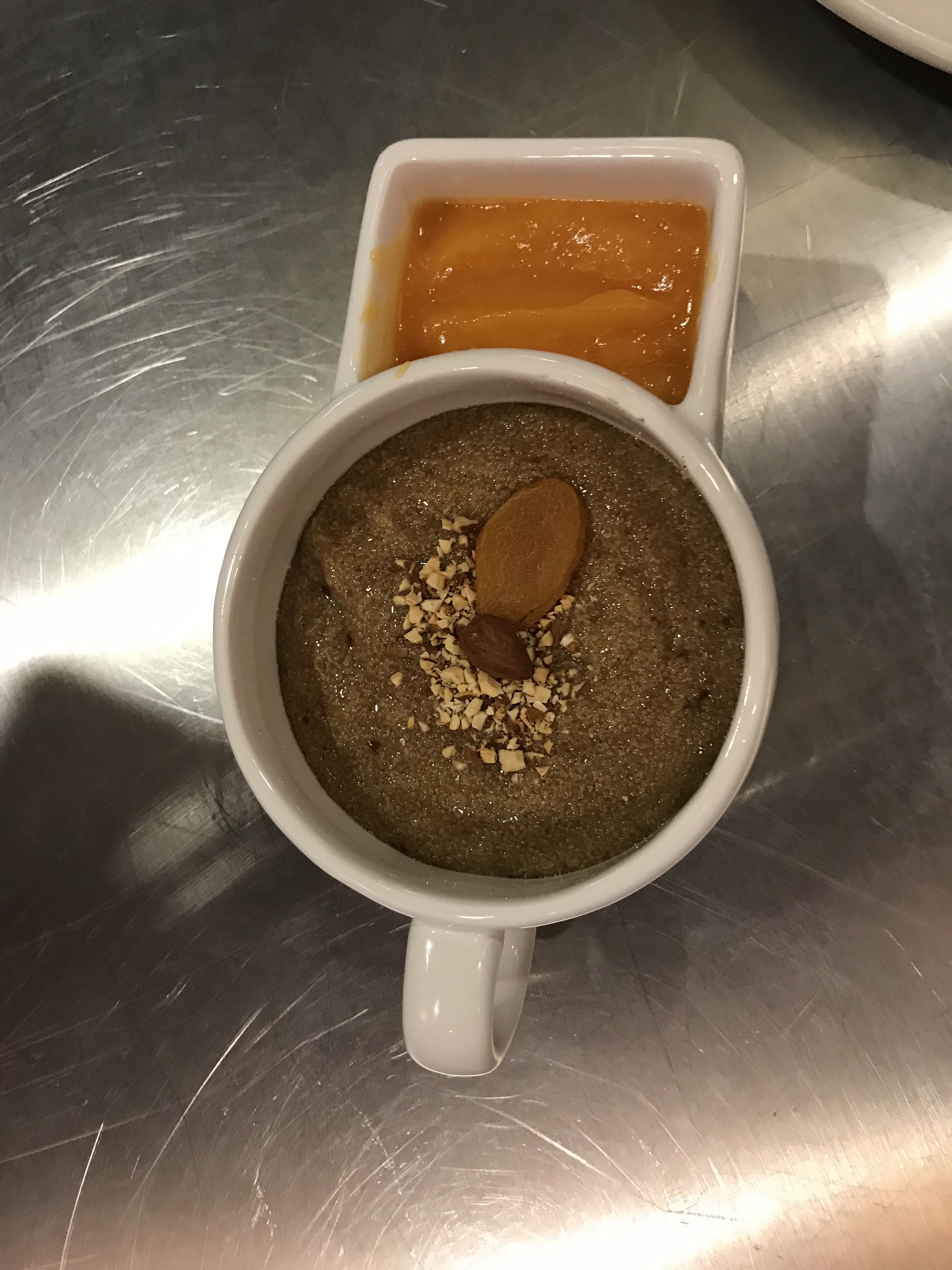
This week I learned a lot of new things about cooking and about new ingredients. Before taking this wonderful cooking class, I had never really even heard of gluten-free flours, let alone work with them. I noticed the texture is a little different when using gluten-free flour and the taste is a little bit off. Not totally sure how to explain it, but I could tell it was different than regular flour. It tasted good though, so it was definitely something I will consider using in the future! We used garbanzo flour this week, which is gluten free as well as the amaranth we used in gluten free!
I also learned about anti-nutrients and that they are the components of plants that are there to keep animals from eating them. The anti-nutrients make it hard for your body to digest and absorb the actual nutrients that the plants have to offer. Soaking and sprouting are ways to reduce the amount of anti-nutrients found in your food! We used the soaking this week and soaked the chickpeas overnight. You want to drain the chickpeas after soaking to get rid of all of the anti-nutrients. Another way to reduce anti-nutrients is to cook the plants with kombu seaweed. The seaweed has a natural way of extracting anti-nutrients out of the plants. How cool right?!
I have definitely tasted roasted vegetables before and I absolutely love them! The roasted vegetables have more of a smoky flavor and are more crispy on the outside. They have a nice crunch when you bite into them. The steamed veggies have a fresher flavor and are more moist and soft when you bite into them. I really enjoyed the flavor and texture balance between the citrus, brussel sprouts, seeds, and puree. The citrus was a bit strong for my taste, so maybe a little less of that would have been better for me. I loved the brussel sprouts though, they are my favorite vegetable! The chickpea puree and the seeds were also very good and added a nice balancing flavor to the brussel sprouts.
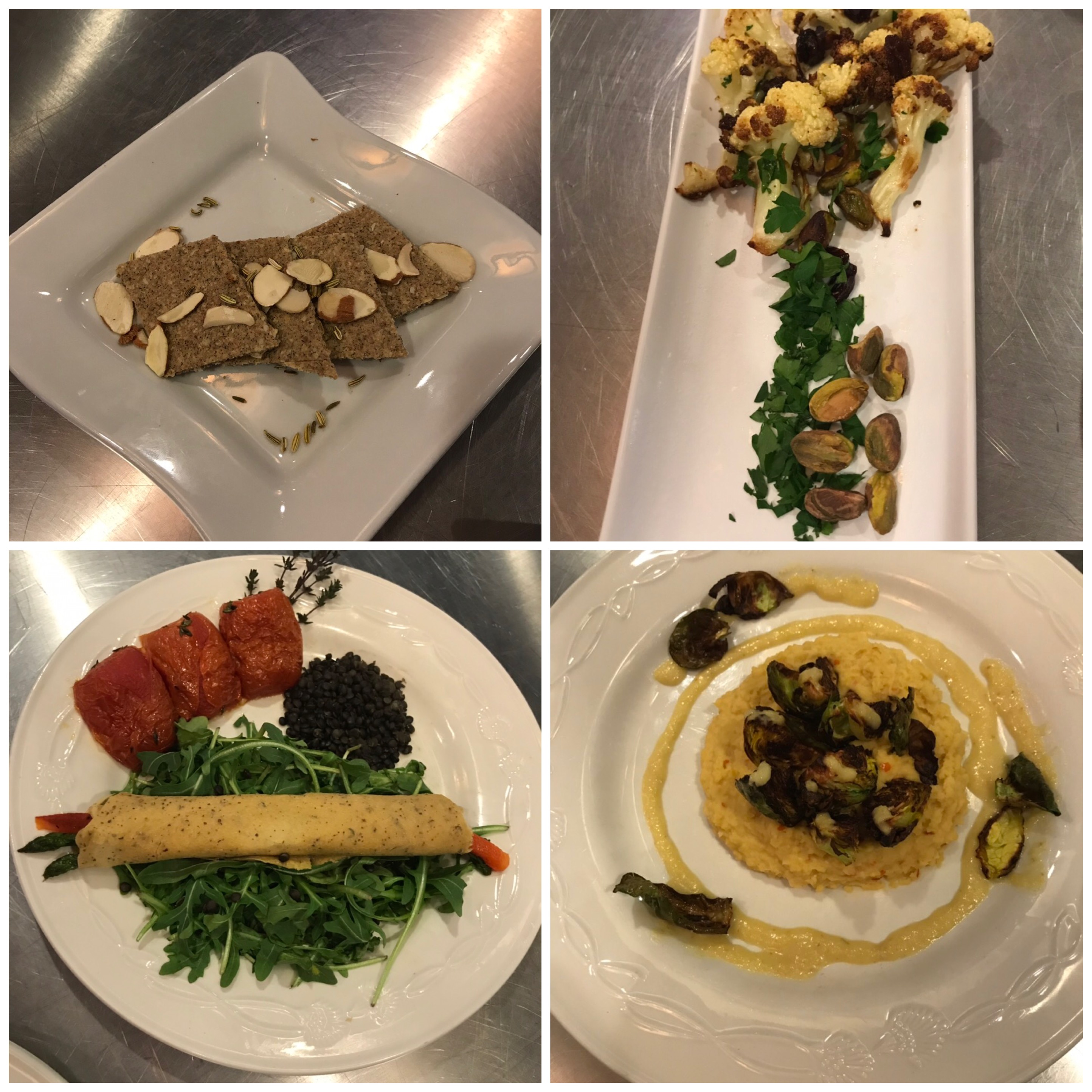
Some new cooking techniques that I learned about include searing, deglazing, sauteing, and sweating. In order to achieve a perfect sear, the pan needs to be very hot, but not smoking. Another way to to make sure you shake off all the extra moisture and dry the food that you’re searing before adding it to the pan. To test and see if the pan is hot, you should look for a sizzle if you drop some water into the pan. Another way to tell is if you put oil in the pan and it moves quickly, forming a shimmer effect. Deglazing is a technique used after food that has been cooked has been removed from the pan that it was cooked in, along with the excess fat. The pan is brought back to the heat source and a liquid of choice is poured into the pan to create steam and release any bits (fond) that have stuck to the bottom of the pan. You can use a variety of liquids to deglaze like wine, stock, juice, and vinegar. There are some differences between the techniques of sweating, sauteing, and searing. Searing is a technique used to caramelize the food while sauteing allows for caramelization to occur and cooks the food throughout. Sweating is very similar to sauteing in the fact that they both involve cooking over the stovetop. Sweating is a little different though because it involves cooking with low heat and little to no fat. Some plant-based dishes you can make using the saute method is a corn, zucchini, tomato, and basil skillet saute. Another recipe using searing is pan seared vegan pesto gnocchi. You can sweat almost any vegetable like zucchini or broccoli.
Roasting and steaming are two very different cooking methods. Steaming is a wet cooking method while roasting is dry. Steaming often doesn’t add a lot of flavor to vegetables or whatever is being steamed and it typically softens the food. Roasting adds a nice crisp texture and a depth of flavor. I love to steam zucchini and squash because I like the soggy texture it gets from the steam. I think they already have a nice flavor which is enhanced from steaming. I love to roast broccoli, cauliflower, and brussel sprouts. The smoky flavor and the crunch is so good altogether.
So far, my progress in this class is great. I have tried so many new foods already that I had never even heard of before. I have learned so many new cooking methods and my favorite thing so far is how to make almond milk. I love all of the new experiences I have gained from this class so far and am so excited for what the future has in store.

 Food for Thought